


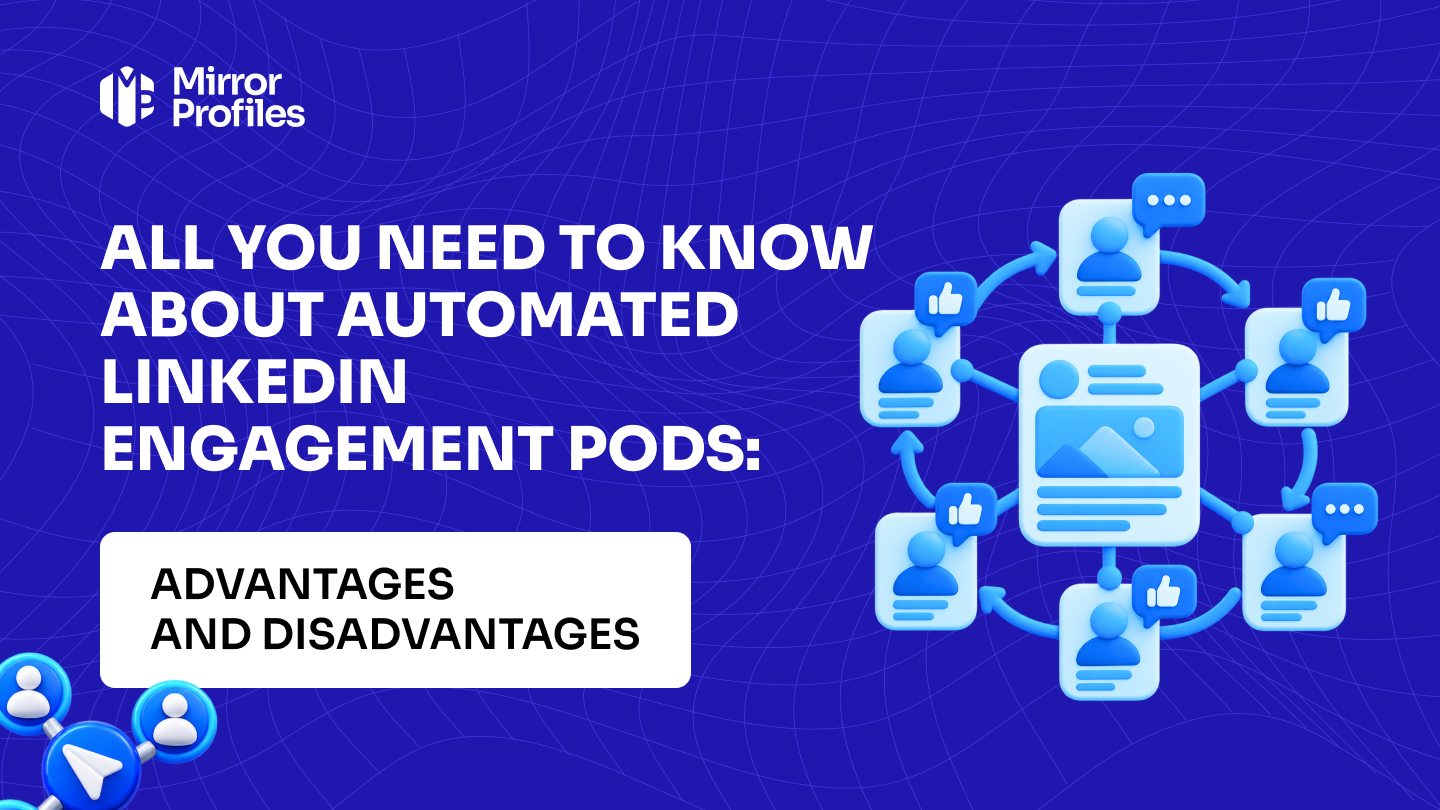
LinkedIn engagement pods have emerged as an ingenious solution for artificially boosting engagement with content published on LinkedIn. These pods, as dedicated groups, are organized around specific themes, in which each member benefits from an automatic push of likes, comments and shares from other members, with no manual action required. By joining pods, people can engage more effectively, enhancing their business presence and professional connections. Thanks to tools such as Podawaa, group animation is facilitated, enabling everyone to comment and interact more effectively. On the face of it, this sounds fantastic, especially for those who know how important the first hour following a post on LinkedIn is for maximizing the rate of engagement and, consequently, the visibility of their content on social networks.
But, yes, there’s always a catch. More and more people are asking about the real effectiveness of these pods and the risk of LinkedIn detecting this practice via publication analytics, which could compromise the reach of your posts and even the credibility of your profile within your industry. The use of CRMs and tools like Podawaa can influence the algorithm’s reactions and contribute to the growth of your connections. In this article, we’ll take a detailed look at the pros and cons of automated LinkedIn pods to help you make an informed decision that aligns with your business needs.
Advantages of automated LinkedIn engagement pods
LinkedIn, the professional social network founded in 2002 by entrepreneurs such as Reid Hoffman and Allen Blue, now boasts over 950 million members and 380 million monthly active users. Acquired by Microsoft in 2016 for the astronomical sum of $26.2 billion, the site has evolved considerably, focusing on improving the user experience through engagement, quality content and diversity of sources to boost the visibility of your posts. In this context of declining organic reach, automated LinkedIn pods offer some undeniable advantages for business growth. What’s more, using groups and tools like Podawaa allows you to better target your audience and optimize your posts for LinkedIn’s algorithm.
Background:
With the decline in organic reach on social networks, businesses and professionals are looking for ways to increase the visibility of their posts without having to sponsor them. However, I encourage you to take a look at this article on how to improve your ads with LinkedIn if you’re considering advertising. Using pods and CRM tools can also complement your selling and engagement strategies on LinkedIn by creating stronger connections and boosting your overall engagement.
How the LinkedIn algorithm works:
LinkedIn’s algorithm works primarily on the engagement rate of your posts. Once posted, a post is initially shown to a small sample of your network. If this initial audience interacts favorably with your content, it is then presented to a wider group of users, boosting the reach of your publications. The engagement rate should (ideally) be above 30%. Here’s how to calculate it: Engagement rate = (the sum of likes, comments and shares) / (the number of connections you have). Understanding the algorithm is essential to optimizing your posts and maximizing the reach and growth of your business on social networks.
It’s important to note that the weight of comments is often more significant. Indeed, a comment could be five to twenty times more valuable than a simple like. This emphasis on comments means that qualitative engagement is essential to maintaining content virality over the long term. Using tools like Podawaa to encourage relevant comments and shares can greatly improve your visibility and reinforce your audience’s engagement.
LinkedIn pods:
This is where automated LinkedIn pods come in. These are groups of individuals who mutually commit to increasing the visibility of their posts by generating likes and automatic comments. Pod types vary, from manual pods, which require direct exchanges between members, to automated pods, which use tools like Lempod, Alcapod or Podawaa to automate this process. Integrating these pods into your CRM strategy can also facilitate interaction management and optimize your sales efforts, boosting your business growth.
Advantages of automated pods:
- Increased engagement: The first benefit is, of course, the increased engagement rate, which is vital for the visibility and growth of your posts.
- Riding the bandwagon effect: A high engagement rate encourages more interactions, exploiting the bandwagon effect where users are more inclined to interact with already popular content, boosting your post’s reach.
- Extended reach: Your publications gain visibility, reaching a wider audience and creating more connections than your immediate network.
- Post scheduling: Tools like Lempod, Alcapod and Podawaa allow you not only to automate engagement but also to schedule your posts, which is particularly useful for professionals with a long-term editorial strategy.
Another advantage of well-used pods is their ability to help launch and develop a brand. Indeed, by increasing the visibility of posts, they can raise brand awareness and boost your online presence. What’s more, authentic interactions within pods help engage your audience, build strong connections and enhance your sales efforts.
However, it’s essential to integrate pods into an overall communications strategy. In other words, engagement shouldn’t be based solely on pods, but should be part of a broader approach to building professional credibility and business awareness on LinkedIn. Using an effective CRM and diversifying your content can help create relevant connections and balance your efforts between organic interactions and those generated by pods.
Despite these undeniable advantages, LinkedIn pods are not without their drawbacks for your business and professional growth. We’ll look at these aspects in the next section.
Disadvantages of automated LinkedIn pods
LinkedIn pods, whether manual or automated, are not without their shortcomings. Before integrating them into your LinkedIn strategy, it is important to consider several negative aspects that could impact your business and professional connections:
- Lack of vertical targeting: The big problem with pods is often that not all members are from your target sector or industry. Having a targeted, verticalized network on LinkedIn is essential for effective communication and an accurate calculation of engagement rates.
- Misuse and bad reputation: Inappropriate use of these tools can contribute to a bad reputation, compromising the authenticity of your profile and professional connections.
- Frowned upon by LinkedIn: LinkedIn treats pods as an inauthentic engagement practice, and may restrict the reach of the posts concerned, or the account itself.
- Quality of interactions: Especially with automated pods, the quality of comments and engagements can be very low, which can damage your business image.
- Unqualified audience: You could attract engagement from people who have no interest in your field, diluting the effectiveness of your messages and hindering your business growth.
- Lack of active members: In many pods, especially manual ones, there’s a strong presence of ghost members, i.e. members who don’t actively participate and engage with your content.
- Time-consuming manual pods: Although manual pods can deliver higher-quality interactions, they require a considerable investment of time, which could be better spent on other business activities.
- Algorithm detection risk: LinkedIn has refined its algorithm to detect and penalize inauthentic types of engagement, including those generated by pods, potentially harming your profile’s visibility.
- Dependence and neglect: Over-reliance on pods can make you dependent on them to the detriment of other crucial aspects of your LinkedIn marketing strategy, such as outbound prospecting.
- Lack of authenticity: The use of pods can give the impression that your engagement is not authentic, affecting your credibility and online reputation in your industry.
It’s worth noting that LinkedIn closely monitors pod activity and is able to take action against accounts that abuse them. For the record, the creator of this solution is Guillaume Moulbeche of Lemlist, with Lempod. When LinkedIn realized that he had created this tool and, above all, this technique, it closed his account for good, which gave rise to the hashtag #freeguillaume on LinkedIn. After several months and at the insistence of his community, Guillaume was able to open a new LinkedIn profile. This illustrates how strict LinkedIn is with the misuse of pods, and how careful you need to be to keep your professional profile and business connections healthy.
The use of these tools must therefore be cautious and measured, to protect your professional reputation and business connections.
Automated pods certainly have their advantages, but the disadvantages underline the fact that there’s no substitute for a real community. Building authentic relationships and engaging with your professional connections through meaningful conversations remains essential for lasting success on LinkedIn.
Nevertheless, judicious and targeted use of pods, particularly through private groups, can represent a significant competitive advantage. The key to a successful strategy on LinkedIn lies in a balanced and complementary approach between outbound and inbound campaigns. Using CRM and post scheduling tools can optimize your content and maximize the impact of your posts, boosting user engagement and fostering business growth.
MirrorProfiles and LinkedIn pods
MirrorProfiles provides dedicated LinkedIn accounts, manually warmed up over 4 months and ready for automation: you run your own tools and campaigns, MirrorProfiles provides the accounts and one platform to manage them. It’s best known for outbound strategies, where it multiplies your prospecting volume in proportion to the number of accounts. But what can it do for your inbound marketing strategy? Here are a few points to consider:
Inbound strategy with MirrorProfiles:
- Team engagement on your posts: The healthiest form of pod is a small private group of people who actually work together. Your colleagues’ accounts and your MirrorProfiles accounts can all support your company’s commercial or recruitment posts in that crucial first hour, with a like and a genuine comment from people who know the subject. That’s engagement your content deserves, not engagement bought from strangers.
- Verticalization and personalization: One of the main drawbacks of pods is their heterogeneity in terms of members and interests. Opt for moderately-sized pods (50 to 200 members) that match the niche you’re targeting, and personalize your MirrorProfiles account accordingly before joining. MirrorProfiles accounts are customizable (industry, positioning, photo, headline), within our usage rules. An account positioned as an IT engineering expert will naturally find its place in IT-focused groups, and a post about a product for that niche will benefit from the engagement of targeted profiles, reinforcing your credibility and professional connections. To optimize your LinkedIn account, consult our guides on the subject.
- Making the most of every account: Between outbound and inbound, the same MirrorProfiles accounts serve both your prospecting sequences and your content strategy. One account per target or ICP lets you verticalize both at once: a focused network for your posts, and a relevant audience for your outreach.
Using MirrorProfiles alongside LinkedIn pods can be a powerful strategy for boosting your visibility and engagement on the platform. Nevertheless, it is crucial to use these tools with measure, within our usage rules, so that every account stays healthy. Integrating these tools into your CRM and diversifying your content will guarantee a safer and more effective approach to growing your professional connections and business.
If, like many LinkedIn pod enthusiasts, the idea of buying followers to rapidly expand your professional network appeals to you, it’s important to proceed with caution. Like pods, buying followers may look attractive on paper by increasing your connections, but the reality can negatively impact your engagement and business growth. To learn more about the risks and benefits of this strategy, I invite you to read this article: Buying followers for a LinkedIn account.
In short, each tool has its advantages and disadvantages. The secret to a successful LinkedIn strategy lies in a balanced and thoughtful use of these various options. Combining the use of pods, CRM tools and quality content will effectively target your audience, boost your engagement and enhance your presence on social networks.
FAQ
What is a pod on LinkedIn?
On LinkedIn, a “pod” is a private group of users who agree to engage with each other’s content (liking, commenting and sharing) to boost visibility. This practice aims to increase post reach using LinkedIn’s algorithm, but it goes against the spirit of the platform, which favors authentic engagement, and it can affect the credibility of your interactions.
What is the best pod for LinkedIn?
The best pod for LinkedIn depends on your niche and goals. Generally, pods that focus on genuine engagement, relevant industry connections and consistent interaction yield the most value. Look for pods with active members who comment thoughtfully and share insights to boost visibility and networking efficiently.
How do you join a LinkedIn pod?
To join a LinkedIn pod, first research active pods in your niche via LinkedIn groups or social media. Request entry by messaging the pod admin, highlighting your engagement intentions. Follow the pod’s guidelines for sharing and commenting to maximize mutual support and growth. Consistency is key to success.
What is the 5-3-2 rule on LinkedIn?
The 5-3-2 rule on LinkedIn suggests creating a content mix: 5 posts sharing others’ content, 3 original posts of your own, and 2 personal or casual posts. This balance engages your audience while promoting authenticity and variety in your professional presence.