


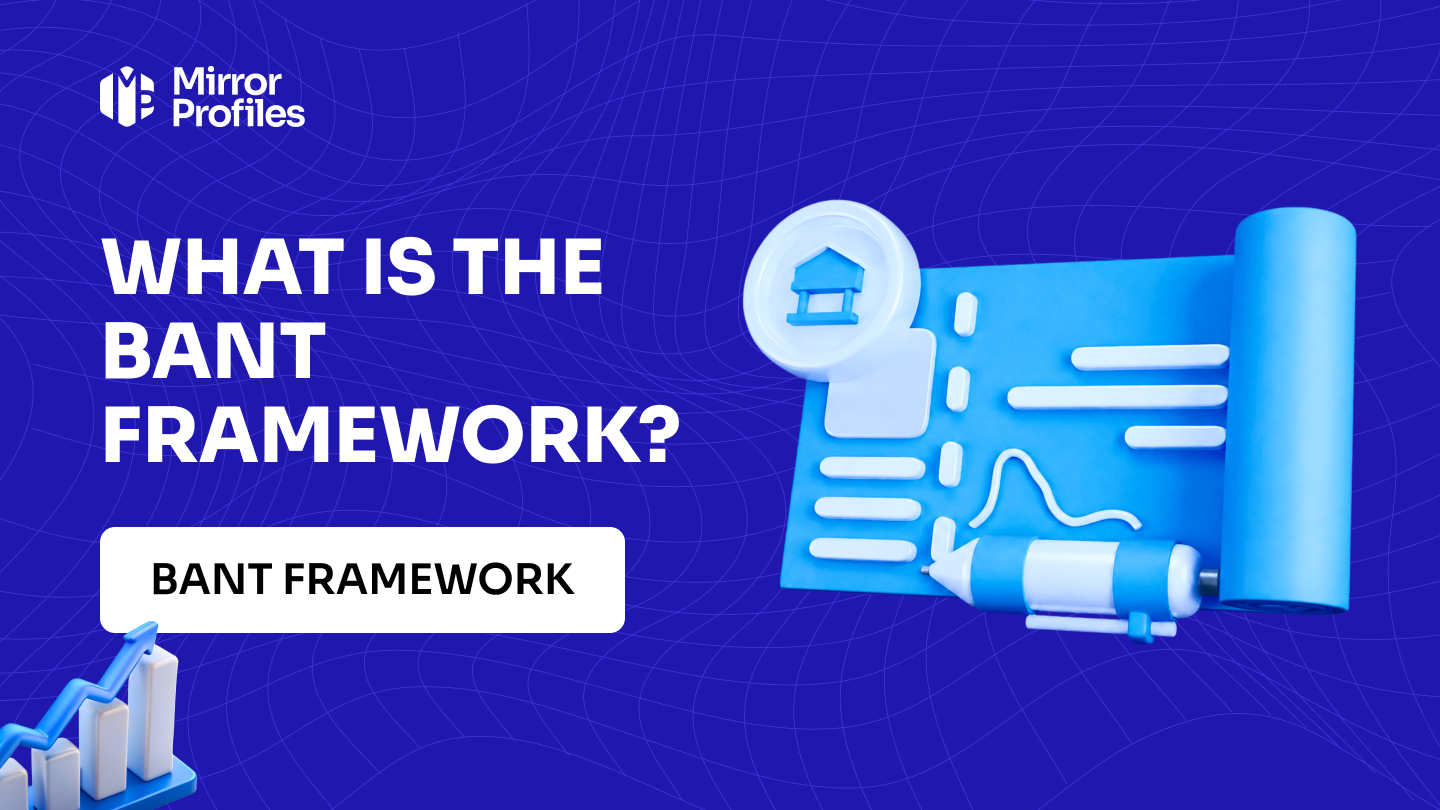
The BANT framework, developed by IBM, is essential for qualifying a lead in B2B sales: it helps you determine whether a prospect is ready to buy. BANT stands for Budget, Authority, Need and Timeframe, the key criteria for evaluating a prospect. When prospecting on LinkedIn, this kind of method helps you get the most out of your sales prospecting campaigns and increase the ROI of your actions.
The framework allows a company’s sales teams to focus on the prospects most likely to become customers, making the best use of time and resources. This article details why the BANT framework matters, its benefits and how to integrate it into your sales strategy.
The BANT framework explained in detail
Origin and meaning of the BANT acronym
Originally developed by IBM, a leading information technology company, the BANT framework takes its name from the initials of Budget, Authority, Need and Timeframe. These four terms are the fundamental criteria for assessing how well a prospect fits into the sales cycle.
The qualification criteria in detail
The BANT framework relies on four essential pillars for effective prospect qualification:
- Budget: This criterion checks whether the prospect has the budget needed to buy the product or service. It is essential to confirm that the available budget is in line with the value offered.
- Authority: This pillar identifies whether the prospect has the decision-making authority for the purchase, including the person in charge of signing the contract and approving the purchase.
- Need: This assesses the prospect’s real need for the product or service on offer, by understanding how it can solve a specific problem for them.
- Timeframe: This criterion measures how urgently the prospect needs the product or service. The greater the urgency, the higher the chances the purchase will go through.
Examples of how to apply each criterion
Here are practical examples of how to apply these criteria during a conversation with a prospect:
- Budget:
Sales rep: “Do you have a defined budget for this solution?”
Prospect: “Yes, we have set aside a budget of X for this project.” – Authority:
Sales rep: “Who will be in charge of signing the contract if we reach an agreement?”
Prospect: “Our CEO will sign, with approval from the head of purchasing.” – Need:
Sales rep: “What challenges are you facing with your current process?”
Prospect: “We lose a lot of time on this step; your solution could improve our efficiency.” – Timeframe:
Sales rep: “When would you like our solution to be up and running?”
Prospect: “Ideally before the end of the quarter.”
Benefits of using the BANT framework
Better lead quality
One of the main benefits of the BANT framework is a significant improvement in lead quality. By evaluating prospects on Budget, Authority, Need and Timeframe, sales teams can identify more precisely which prospects are genuinely ready to buy. This eliminates unqualified leads and lets you focus on those with a real intention to purchase, increasing your chances of conversion. The number of leads may drop, however, which is why you need to compensate by contacting more potential prospects. That is where MirrorProfiles can help: by equipping your sales reps with several dedicated LinkedIn accounts, you multiply your weekly prospecting volume.
Each account can send 100 to 120 connection requests per week to potential prospects, so your volume is proportional to the number of accounts, with each account staying within its own limits.
A more efficient sales process
The BANT framework streamlines the sales process by helping sales teams save time and focus their efforts. With this structured approach, salespeople avoid wasting time on prospects who are not ready or do not have the resources needed for a purchase.
This shortens the sales cycle and improves the overall efficiency of sales teams.
Alignment between sales and marketing teams
The BANT framework fosters alignment between sales and marketing teams by providing a common framework for lead qualification. Both teams can work together using the same criteria to evaluate prospects, which improves communication and coordination. This alignment ensures that qualified leads are handed over to sales teams efficiently, reducing misunderstandings and wasted time.
Better ROI on sales prospecting campaigns
Using the BANT framework can considerably improve the return on investment (ROI) of prospecting campaigns. By focusing on the most qualified prospects, companies can increase their conversion rates and reduce the costs of chasing non-viable leads.
This means resources are allocated more effectively, leading to more profitable prospecting campaigns.
How to implement the BANT framework in your sales strategy
Integration into CRMs and sales tools
Integrating the BANT framework into your customer relationship management (CRM) systems and other sales tools is essential for a successful rollout. You can configure your CRM to include fields specific to the BANT principles: Budget, Authority, Need and Timeframe. This approach centralizes information and makes it easier to track prospects through the sales cycle.
Also set up your sales automation tools to send reminders and notifications based on the BANT principles. This helps you keep in regular contact with qualified prospects.
Training sales teams to apply BANT
Training your sales teams to apply the BANT framework is essential to ensure consistent, effective use. Organize detailed training sessions on the four BANT criteria and on how to apply them when interacting with prospects. Salespeople need to be trained to ask the right questions to gather the essential information, and to analyze that information to qualify prospects accurately.
Role-plays and practical exercises are excellent ways for salespeople to get familiar with the framework and apply it effectively.
Measuring the impact of BANT on sales
Measuring the impact of the BANT framework on your sales is indispensable for evaluating its effectiveness and identifying areas for improvement. Track key indicators such as the conversion rate of qualified prospects, the average time to close a sale and the return on investment (ROI) of your prospecting campaigns.
Analyzing this data lets you adjust your sales strategy and fine-tune how you use the BANT framework to maximize results. Regularly collecting and sharing feedback with sales teams can also reveal best practices to adopt across the organization.
In conclusion, the BANT framework remains essential for lead qualification in B2B sales. By evaluating prospects on Budget, Authority, Need and Timeframe, sales teams can precisely target the most promising opportunities. This structured method raises lead quality, makes the sales process more efficient and ensures better coordination between sales and marketing teams. Quantity, for its part, comes from using several MirrorProfiles accounts together with your LinkedIn automation tool.
To get the most out of the BANT framework, it is vital to integrate it into modern sales tools and make sure your teams are trained to use it. By putting the BANT framework into practice, you improve your conversion rates and the return on your prospecting efforts.