


Introduction
The dream of every salesperson, marketer, director and CEO: each prospect automatically ranked according to how likely they are to become a customer. All right, “dream” is probably a bit strong, but one thing is certain: we spend a lot (too much) of time working out whether a prospect can become a lead. Yet it is an essential task, because it lets sales teams concentrate their LinkedIn prospecting efforts where they are most likely to bear fruit. In reality, however, without the right tools, ranking and prioritizing prospects can quickly become a complex and haphazard job. Fortunately, lead scoring is an effective way to bring order to the prospect qualification process. And the good news is that it automates very well, especially in a pre-CRM.
What is lead scoring?
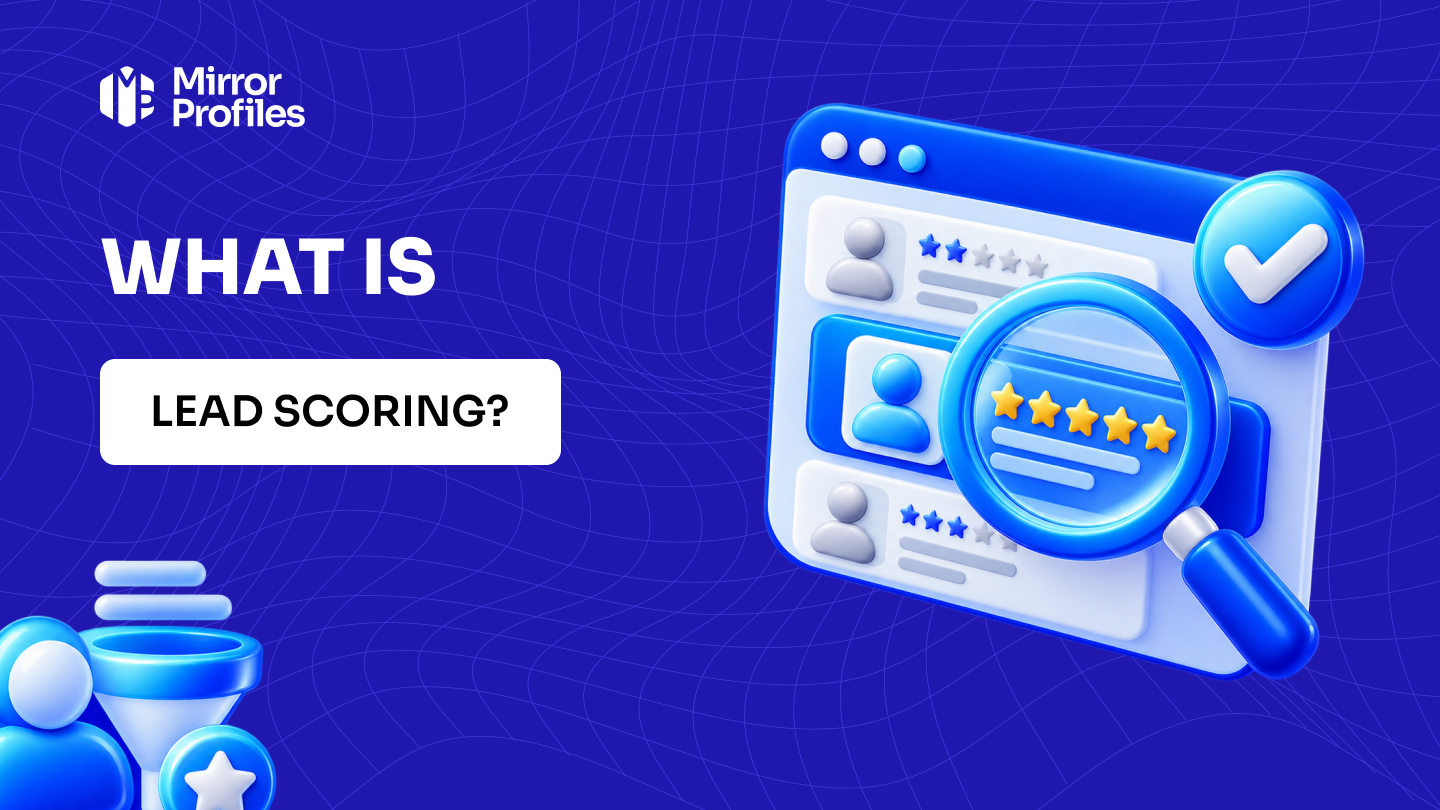
Lead scoring, or prospect rating, is an essential digital marketing technique that consists of assigning scores to prospects according to their potential to become customers. This marketing method allows companies to prioritize their follow-up and engagement efforts by focusing on the most promising leads. In other words, lead scoring is a marketing strategy that helps identify which prospects are ready to move forward in the sales funnel and which need more nurturing.
The lead evaluation process is generally based on a variety of criteria, which can be divided into two broad categories: demographic information (or explicit data) and online behavior (or implicit data). Demographic data includes elements such as the business sector, company size, job title or geographic location. Online behavior covers interactions with your website, participation in webinars, content downloads, email opens and more.
In lead scoring, every interaction a prospect has with your company is evaluated and awarded a certain number of points. Let’s take a concrete example: if a prospect opens an email you sent them, this can be considered a sign of interest and might be awarded a modest score. However, if that same prospect goes further and replies to the email, demonstrating a higher level of engagement, that action could justify a significantly higher score. Such distinctions are crucial because they make it possible to nuance each prospect’s degree of interest and engagement.
The sum of the points awarded for each action or characteristic then determines a lead’s overall score. This overall assessment makes it possible to rank prospects according to their level of qualification and their expressed interest, making life easier for sales teams, who can then prioritize their efforts on the most promising leads.
The ultimate aim of a lead scoring marketing strategy is to streamline the sales process by ensuring that sales reps focus their time and resources on the most qualified leads. By providing a clear view of the value of each prospect, lead scoring helps increase the effectiveness of prospecting campaigns and improve the conversion rate of leads into customers.
What is lead scoring (or lead rating) used for?
Companies, especially in their growth or maturity phase, face a significant influx of leads. This is when lead scoring proves to be an indispensable marketing tool. The major challenge is not to be overwhelmed by the quantity, and to effectively distinguish the most promising prospects from the others, in order to concentrate efforts and resources in the best possible way.
Lead scoring is a marketing strategy whose main purpose is to guide each prospect in a personalized way through the different stages of the conversion funnel. By assigning a score to each lead, based on predefined criteria, companies can prioritize their actions and adjust their content strategy accordingly.
Delivering the right content, at the right time, to the right future customers is essential. A lead who receives information that is too advanced for their level of interest or understanding may feel overwhelmed and disengage. Conversely, a prospect who is ready to take action but does not receive the necessary nudge or information at the right moment may also turn to the competition.
Lead scoring thus helps identify the precise moment when a prospect is “hot” or mature enough to be approached with a sales proposal. Starting a sales action too early risks breaking the trust that has been built and scaring the lead away. It is therefore crucial to properly assess the prospect’s maturity and interest before initiating any sales approach.
In short, lead scoring is a strategic lever that optimizes the customer journey, improves the effectiveness of sales and marketing teams and, ultimately, maximizes conversion rates. By identifying and focusing on the most qualified prospects, companies can refine their follow-up and nurturing strategies, ensuring healthy, sustainable growth.
Managing lead scoring effectively directly within a CRM can prove to be a complex and tedious task. Without an adequate system to filter and qualify leads from the very first stages of the sales funnel, sales teams risk being swamped by a never-ending flow of information. This overload can make it difficult to tell the most promising prospects from the least interesting ones, reducing the overall effectiveness of sales and marketing efforts.
This is precisely where a pre-CRM comes in handy. A pre-CRM is designed to operate upstream of the main CRM, acting as an initial filter for the leads generated by your various prospecting campaigns. By evaluating and qualifying leads as soon as they enter the system, the pre-CRM considerably lightens the workload of the main CRM and ensures that only the most qualified leads are transferred to it.
Automating lead scoring with a pre-CRM
A pre-CRM is the ideal tool for automating the lead scoring of your sales prospecting. Synchronized with your prospecting tools, it aggregates all your prospecting data in one place. Thanks to this centralization, it can automatically generate a to-do list for your sales reps, who stay organized and efficient as a result.
This approach has proven itself in sectors where the ability to react quickly and in a personalized way has a direct impact on the success of sales interactions.
With an automated lead scoring system, sales teams can clearly tell which prospects need an immediate follow-up and which can wait. After each interaction, such as a call, the system automatically adjusts each lead’s score based on various indicators, such as the interest shown, the questions asked or the level of engagement during the conversation.
Thanks to lead scoring, sales reps know precisely who to follow up first, based on a score that reflects the urgency and quality of the prospect. Lead scoring not only optimizes their follow-up process but also increases the chances of converting prospects into customers, by acting at the most opportune moment and with the arguments best suited to each situation.
The point of automating this function is to streamline the lead qualification process. By automatically assigning a score to each prospect according to their interactions with your prospecting campaigns, whether by email or on LinkedIn, the pre-CRM makes it easier to prioritize the most interested prospects to move them to lead status. This automated lead scoring approach saves your sales reps a lot of time, as they no longer need to build their own to-do list. Lead scoring therefore increases your sales velocity and, ultimately, the number of leads you generate.
Advantages of this approach
- Automation: each prospect’s score updates on its own, with no manual entry after each interaction.
- Increased efficiency: sales reps follow up the hottest prospects first, at the right time.
- Improved qualification: only genuinely mature leads are passed on to the main CRM.
Automated lead scoring transforms the traditional approach to prospect management. By assigning a dynamic score to each interaction, sales teams have a clear, up-to-date view of each prospect’s priority. It makes it easy to tell hot prospects from lukewarm ones, ensuring timely, targeted follow-up.
The real gain appears when these qualified prospects, thanks to their high score, turn into leads ready for a deeper sales approach. At this crucial stage, a good pre-CRM lets you effortlessly transfer these valuable leads directly into the company’s main CRM. This smooth transition ensures that the most promising leads are immediately available to sales teams for targeted follow-up actions, avoiding any risk of neglect or oversight that could occur in a manual process.
In short, automated lead scoring in a pre-CRM doesn’t just optimize the prospect qualification process, it changes the way companies commit their sales efforts. By ensuring that only the most qualified leads are presented to sales teams, it maximizes the chances of conversion while preserving valuable resources. It is this efficiency and precision that make it an essential building block for any company looking to optimize its prospecting and conversion strategy.
Attracting new prospects and turning them into leads is all well and good, but converting them into customers is even better. This is where the concept of lead nurturing comes in, another method worth discovering.